Bonnie Garmus – Lessons in Chemistry Audiobook
Bonnie Garmus – Lessons in Chemistry Audiobook
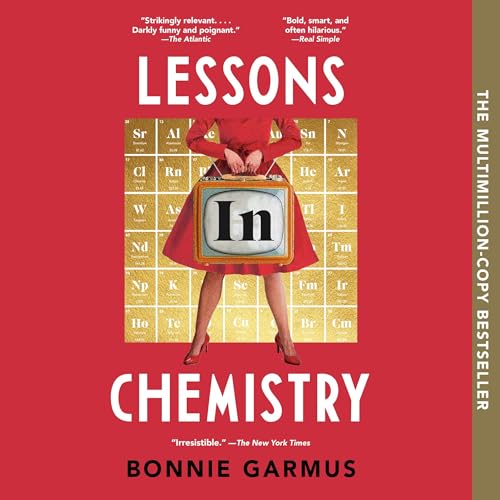
text
An Auditory Triumph: Why the “Lessons in Chemistry” Audiobook is a Pitch-Perfect Masterpiece
Bonnie Garmus’s Lessons in Chemistry arrived not just as a novel, but as a cultural phenomenon. It was a runaway bestseller, a book club darling, and a story that resonated with millions for its sharp wit, defiant feminism, and unforgettable protagonist. While the text itself is a triumph, the audiobook version, narrated by the brilliant Miranda Raison, achieves something remarkable: it distills the essence of the novel into its purest form, creating an auditory experience that is arguably the definitive way to meet the formidable Elizabeth Zott.
This is not merely a book read aloud. It is a masterclass in character embodiment and tonal precision, transforming Garmus’s vibrant prose into a living, breathing world that is at once hilarious, infuriating, and profoundly moving.
The Formula: A Story of Science, Sexism, and Supper
Set in the late 1950s and early 1960s, Lessons in Chemistry introduces us to Elizabeth Zott, a woman whose mind is a gleaming laboratory of logic and reason, trapped in an era that sees her only as a potential wife and mother. Elizabeth is a chemist—a brilliant one—but the patriarchal world of the Hastings Research Institute constantly undermines her, steals her work, and relegates her to the role of a pretty face.
Her life changes when she meets Calvin Evans, a reclusive, Nobel-nominated genius who is her intellectual equal. Theirs is a partnership of minds, a “chemical reaction” of love and respect that stands in stark contrast to the misogynistic world around them. But when tragedy strikes, Elizabeth finds her life taking an unexpected detour. She becomes a single mother and, through a bizarre series of events, the reluctant host of a television cooking show, Supper at Six.
But Elizabeth doesn’t just teach women how to cook. She teaches them chemistry. Using the kitchen as her lab, she empowers her audience of overlooked housewives to understand concepts like sodium chloride and amino acids, all while subtly encouraging them to challenge the status quo. She is a quiet revolutionary in a starched apron, and her story is one of resilience, intellect, and the radical act of taking oneself seriously.
The Narrator: Miranda Raison as the Voice of Reason
The success of this audiobook rests almost entirely on the shoulders of its narrator, Miranda Raison. An accomplished British stage and screen actress, Raison brings a level of nuance and intelligence to her performance that is a perfect match for the material. Her portrayal of Elizabeth Zott isn’t just a voice; it is the character made manifest.
1. Embodying Elizabeth Zott:
Raison’s masterstroke is her vocal characterization of Elizabeth. She gives her a crisp, precise, and almost unflappable tone. Every word is delivered with a matter-of-fact clarity that reflects Elizabeth’s logical, scientific mind. When Elizabeth corrects someone’s faulty grammar or dismantles a sexist argument with cold, hard facts, Raison’s delivery is devoid of emotional flourish. It’s a deadpan performance that makes the book’s humor land with devastating effect. You don’t just read that Elizabeth is blunt; you hear her bluntness, and the uncomfortable silence it leaves in its wake.
Yet, this precision also makes the moments of emotional vulnerability all the more powerful. When Elizabeth’s carefully constructed world is shattered by grief or ignited by love, the slight tremor in Raison’s voice, the fractional pause, carries immense weight. It’s the sound of a stoic, brilliant woman grappling with the illogical chaos of human emotion.
2. A Full Cast of Characters:
While Elizabeth is the star, Raison skillfully populates the world with a distinct and believable supporting cast.
- Calvin Evans: She gives the awkward genius a voice filled with a gentle, humming energy and intellectual fervor. You can hear his social awkwardness, but also the warmth and profound respect he has for Elizabeth.
- Walter Pine: The weary but kind-hearted TV producer is brought to life with a sigh in his voice, perfectly capturing a good man trying to do the right thing within a broken system.
- The Antagonists: Raison imbues the book’s misogynists, like Dr. Donatti and Mr. Roth, with a smug, patronizing tone that will make a listener’s blood boil. She doesn’t caricature them as cartoon villains but presents their sexism as the casual, entitled, and infuriating reality it was.
- Six-Thirty: Perhaps the greatest challenge is narrating the chapters from the perspective of Elizabeth’s dog, Six-Thirty, who possesses a surprisingly large vocabulary and a keen sense of observation. Raison handles this with genius, giving the dog’s internal monologue a solemn, observant dignity. She avoids a silly “dog voice,” instead treating his thoughts with the seriousness they deserve, making his sections both profoundly funny and deeply touching.
How the Audio Format Elevates the Text
Listening to Lessons in Chemistry provides unique advantages over reading it on the page.
- Making Science Accessible: The novel is peppered with chemical terms and scientific explanations. For some readers, this might be intimidating. Raison’s clear, confident, and rhythmic delivery turns these sections into a form of poetry. She makes the science sing, delivering Elizabeth’s lessons with such passion and clarity that the listener feels they are right there in the studio audience, learning why H₂O is the foundation of everything.
- Perfect Comedic Timing: So much of the book’s humor comes from Elizabeth’s deadpan reactions to the absurd world around her. Audio is the perfect medium for this. Raison’s impeccable timing—the slight pause before a devastatingly logical comeback—lands every joke with pinpoint accuracy.
- Amplifying the Emotional Core: While hilarious, the book is also deeply emotional, dealing with grief, loneliness, and the struggle for recognition. Hearing the story performed adds a visceral layer to these emotions. The righteous anger in Elizabeth’s voice during a confrontation, the deep sorrow following a loss, and the quiet joy of a found family are all made more immediate and impactful through Raison’s performance.
Conclusion: A Definitive Listening Experience
The Lessons in Chemistry audiobook is a rare and perfect alchemy. It is the result of a brilliant text meeting its ideal interpreter. Bonnie Garmus created an unforgettable character on the page, and Miranda Raison gave her the perfect voice, turning a literary sensation into an auditory one.
For both newcomers to the story and devoted fans of the novel, the audiobook offers a fresh and deeply engaging experience. It is a story that was meant to be told, and Raison tells it with an intelligence, wit, and heart that would make Elizabeth Zott herself proud. It stands as a benchmark for audiobook production and a testament to how the right narrator can transform a great book into an unforgettable listening event.